
 See My Latest Article on HelloNation

Children may feel nervous about dental visits because the setting is unfamiliar, they expect discomfort, or they remember a difficult medical experience. Dental anxiety can also come from overheard conversations, pictures, stories from siblings, or a parent’s visible worry. The goal is not to force a child to “be brave,” but to help the child feel informed, heard, and gradually more in control.
Why do children become anxious about dental care?
Dental anxiety often develops from a combination of age, temperament, previous experiences, and uncertainty. A child who dislikes loud sounds, bright lights, unfamiliar people, or being touched around the mouth may find a dental visit especially challenging.
Common sources of worry include:
- Fear of pain, needles, or dental instruments
- Not knowing what will happen next
- A previous appointment that felt rushed or uncomfortable
- Hearing an adult describe dental treatment negatively
- Sensory sensitivities involving sound, smell, taste, or physical contact
- Feeling unable to communicate a need for a break
- Tiredness, hunger, illness, or a disrupted routine
A child may not say, “I am anxious.” Instead, anxiety may appear as stomachaches, crying, irritability, refusal to open the mouth, difficulty sleeping, or repeated questions about the visit.
Dental anxiety is not the same as misbehavior. A frightened child may be trying to protect themselves from something that feels threatening, even when the situation is objectively safe.
What can parents do before the appointment?
Preparation works best when it is honest, simple, and matched to the child’s developmental level. Give enough information to reduce uncertainty, but avoid describing every possible instrument or procedure in advance.
Helpful approaches include:
- Use neutral language such as “The dental team will count and check your teeth.”
- Explain that the child can raise a hand if something feels uncomfortable or if a break is needed.
- Read a children’s book about dental visits or use pretend play with a toothbrush and stuffed animal.
- Let the child choose practical comforts, such as clothing, a small toy, or music if permitted.
- Keep the explanation brief for younger children and provide more detail for older children who ask questions.
- Plan the visit when the child is usually rested rather than immediately after a long school or activity day.
Avoid saying, “It will not hurt,” because some parts of care may feel unusual or briefly uncomfortable. A more trustworthy explanation is, “The dental team will explain what is happening and help you if something feels uncomfortable.”
Parents in Watertown may also need to plan around winter weather, school schedules, and longer travel conditions during the colder months. Leaving extra time can prevent a rushed arrival, which may increase tension before the visit even begins.
How should parents talk about the appointment?
Children often take emotional cues from adults. A calm parent does not need to pretend that dental care is completely effortless, but it helps to avoid frightening stories, dramatic warnings, or repeated reassurance that something “will not be scary.”
Try statements such as:
- “You can ask questions.”
- “The dentist will show you some of the tools.”
- “You can tell the dental team how you are feeling.”
- “We will take this one step at a time.”
- “It is okay to feel nervous.”
Parents who have their own dental fear may find it helpful to practice slow breathing before and during the visit. Children may notice a tense voice, clenched hands, or repeated questioning even when the adult says everything is fine. If possible, one calm adult should do most of the talking while the child is preparing for care.
What happens during a child-friendly dental visit?
Pediatric dental behavior guidance usually combines communication, gradual exposure, encouragement, distraction, and careful attention to the child’s signals. The American Academy of Pediatric Dentistry describes techniques such as “tell-show-do,” positive reinforcement, descriptive praise, distraction, desensitization, breathing exercises, and sensory adjustments as part of individualized care. ([aapd.org](https://www.aapd.org/research/oral-health-policies–recommendations/behavior-guidance-for-the-pediatric-dental-patient/?utm_source=openai))
“Tell-show-do” means explaining an age-appropriate step, demonstrating it in a nonthreatening way, and then completing that step if the child is ready. For example, a child may first see an examination mirror, hear the sound of an instrument away from the mouth, and then decide whether to continue.
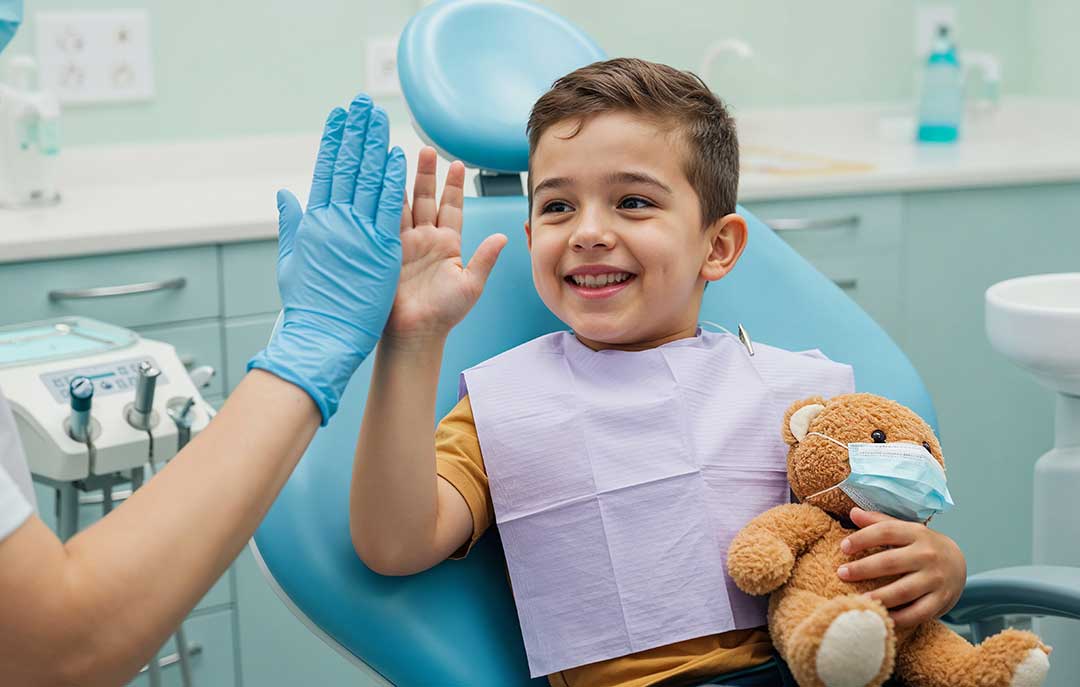
Specific praise is more useful than general praise. Instead of saying, “You were good,” an adult might say, “You kept your hands relaxed while the teeth were counted,” or “You told us when you needed a pause.”
Some children benefit from:
- Watching a video or listening to music
- Practicing slow breathing
- Holding a comfort object
- Using visual schedules or picture explanations
- Taking a short break between steps
- Sitting with a parent nearby, when appropriate
- Meeting the dental team before treatment begins
Evidence supports several nonmedication approaches, but the results vary by child and situation. The AAPD notes that choices should consider the child’s age, health history, temperament, previous experiences, treatment needs, and family preferences. ([aapd.org](https://www.aapd.org/research/oral-health-policies–recommendations/behavior-guidance-for-the-pediatric-dental-patient/?utm_source=openai))
Should a child be promised a reward?
Small, reasonable encouragement can support cooperation, but rewards should not be used to dismiss fear or pressure a child into treatment. A sticker, extra reading time, or another simple privilege may recognize effort after the visit.
Avoid bargaining with a large reward or threatening punishment. That can make the appointment feel like a test the child must pass. The more useful message is that asking questions, communicating discomfort, and trying coping strategies are all successful behaviors.
What if a child refuses to cooperate?
A refusal often signals that the pace is too fast, the child is overwhelmed, or the child does not understand what is expected. Arguing, shaming, or physically forcing a child can intensify fear and make future care harder.
A pause may help identify the specific concern. The child may be worried about the chair, the sound, a gagging sensation, separation from a parent, or a painful tooth. Naming the concern can make it easier to adjust the plan.
For urgent problems such as facial swelling, fever related to a tooth, significant bleeding, trauma, or severe dental pain, delaying care may create additional health risks. In those circumstances, the dental team may need to discuss options that balance immediate treatment with emotional safety.
Are sedation or anesthesia always necessary for anxious children?
No. Many anxious children can receive care with communication, preparation, distraction, and gradual exposure. Sedation or general anesthesia may be considered when anxiety is severe, treatment is extensive or urgent, the child cannot safely remain still, or medical or developmental needs make routine cooperation difficult.
These options require individualized evaluation and informed discussion of benefits, risks, alternatives, and the possibility of postponing care when appropriate. The American Academy of Pediatrics and the American Academy of Pediatric Dentistry have specific safety guidance for sedation and anesthesia in children. ([healthychildren.org](https://www.healthychildren.org/English/healthy-living/oral-health/Pages/Anesthesia-or-Sedation-for-Your-Childs-Dental-Work.aspx?utm_source=openai))
Parents should ask what type of medication is being considered, who will administer and monitor it, what fasting instructions apply, how recovery will be handled, and what alternatives exist. Sedation is not a substitute for communication; it is one possible part of a broader care plan.
When does anxiety need extra attention?
Persistent fear that prevents examinations, causes panic, leads to frequent physical complaints, or continues after several supportive visits may deserve additional attention. A child may benefit from a slower desensitization plan, sensory accommodations, behavioral support, or coordination with the child’s medical or mental health team.
The most useful long-term approach is usually consistent, calm exposure to dental care without shame or threats. Children learn that dental visits are manageable when adults explain what is happening, respect reasonable signals, and help them build coping skills one step at a time.